Commercial refrigerator and freezer temperatures: safe ranges by unit type
David Collins, appliance service expert | October 23, 2026 | Refrigerator repair
Temperature is the heart of food safety in any commercial kitchen. The wrong reading can spoil product, fail an inspection, or make people sick. So every unit must hold a safe, steady range. The trouble is that each type of unit has its own target.
This guide lays out the safe temperature ranges by unit type for 2026. We cover walk in coolers, reach in units, freezers, prep tables, and more. We also share the food safety rules behind the numbers. The legal limits here follow the FDA Food Code that state health codes are built on.
When a unit drifts out of range, fast action protects your inventory. Our certified technicians fix cooling problems, worn door gaskets, and dirty coils that push temperatures up. We serve businesses and homes across Metro Atlanta. Book refrigeration repair with Appliance Tech Pros and keep your food safe.
Key takeaways
- Keep cold food at 41°F or below. Keep frozen food at 0°F or below. These are the core rules in 2026.
- Set each unit colder than the legal limit. A buffer keeps food safe when doors open during service.
- Walk in coolers run best at 35°F to 38°F. Reach in units run slightly warmer at 36°F to 38°F.
- The danger zone is 41°F to 135°F. Food must not sit there for more than four hours.
- Measure the food temperature, not just the air. Log your readings at least twice a day.
The core temperatures every kitchen must know
A few numbers drive every rule below. Cold food must stay at 41°F or below. Frozen food must stay at 0°F or below. Hot food must stay at 135°F or above.
The space in between is the problem. The range from 41°F to 135°F is the temperature danger zone. Bacteria grow fastest here. Food that holds time and temperature control for safety, called TCS food, cannot sit in this zone for more than four total hours. The FDA Food Code sets these limits.
One rule ties it all together. Always set a unit a few degrees colder than the legal limit. This buffer keeps food safe even when staff open the door all shift. And always check the temperature of the food itself, not just the air around it.
Safe temperature ranges by unit type
Each unit works differently, so each has its own target. The table below gives the safe range for every common type. Use it to set your dials and your logs.
| Unit type | Recommended setpoint | Food must stay |
|---|---|---|
| Walk in cooler | 35°F to 38°F | 41°F or below |
| Reach in refrigerator | 36°F to 38°F | 41°F or below |
| Under counter refrigerator | 36°F to 38°F | 41°F or below |
| Refrigerated prep table | 36°F to 40°F | 41°F or below |
| Display or merchandiser cooler | 36°F to 41°F | 41°F or below |
| Reach in freezer | 0°F or below | Frozen solid |
| Walk in freezer | 0°F to -10°F | 0°F or below |
| Blast chiller | Cools hot food fast, well within the 6-hour limit | See cooling rule |
| Beverage or back bar cooler | About 38°F | Not TCS critical |
Walk in and reach in coolers
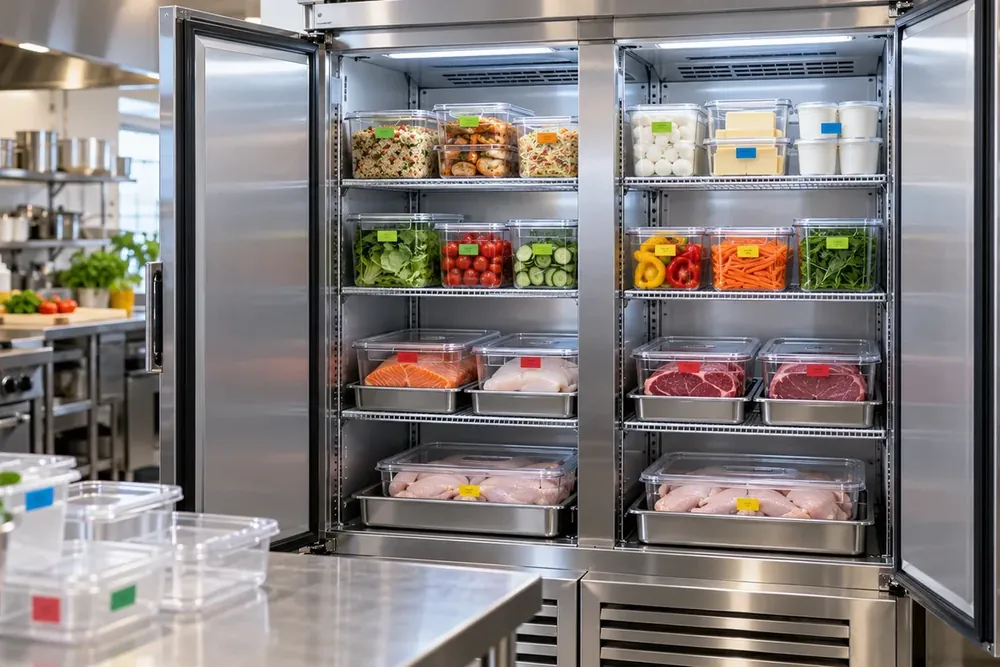
Walk in coolers hold the most product, so stability matters. Aim for 35°F to 38°F. Reach in units run a little warmer because staff open them more often. Set those to 36°F to 38°F so the food stays under 41°F through a busy shift.
Prep tables and display cases
These units expose food to the room. Lids open, warm pans arrive, and ingredients stack up. So check them often during service. Keep the food at 41°F or below at all times.
Freezers
A reach in freezer and a walk in freezer share the same goal. Keep frozen food at 0°F or below. Many operators run a walk in freezer near -5°F for a safe margin. This protects both safety and food quality.
Beverage, bar, and wine units
Beverage and back bar coolers hold drinks, not TCS food. A setting near 38°F works well. Wine coolers are different again, since wine stores warmer than food. For those units, our wine cooler repair team can help with temperature faults. Ice machines also follow their own rules, and we cover those through ice machine repair.
Safe cold holding temperatures by food type
Not all food stores at the same temperature. Raw proteins need the coldest spots. The table below shows ideal targets, all within the 41°F limit. Store raw meat on the lowest shelves so it cannot drip onto other food.
| Food type | Ideal temperature | FDA maximum |
|---|---|---|
| Raw poultry and ground meat | 33°F | 41°F |
| Fresh fish and shellfish | 30°F to 34°F on ice | 41°F |
| Raw beef, pork, and seafood | 33°F | 41°F |
| Dairy and eggs | 33°F to 40°F | 41°F |
| Cut produce and leafy greens | 36°F to 41°F | 41°F |
The USDA Food Safety and Inspection Service offers more detail on safe storage for each group.
Unit not holding temperature? Our technicians handle commercial refrigerator repair across Metro Atlanta. Have a question? Call us at (770) 501-4267.
The two stage cooling rule
Cooling hot food is where many kitchens slip up. You cannot place a hot pot straight into the walk in. The FDA Food Code requires a two stage process instead. It gives you a six hour window.
| Stage | Temperature drop | Time limit |
|---|---|---|
| Stage one | 135°F to 70°F | Within 2 hours |
| Stage two | 70°F to 41°F | Within 4 more hours |
| Total | 135°F to 41°F | 6 hours maximum |
The first stage is the most urgent. Bacteria multiply fastest between 135°F and 70°F, so you get only two hours. Check the food at the two hour mark, then again at six hours. A blast chiller speeds this up and takes the risk out of the process.
How to keep your units in the safe range
Safe numbers mean nothing without steady habits. Check and log each unit at least twice a day. Use a calibrated thermometer and record the reading. A written log protects you during an inspection.
Most temperature problems trace back to a few causes. Worn door gaskets let cold air escape. Dirty condenser coils make the unit struggle. Overloading blocks airflow, and frost buildup hurts freezers. Hot weather adds even more strain, as our guide on why refrigerators fail in summer explains. You can also review safe storage charts from FoodSafety.gov.
FAQ
What temperature should a commercial refrigerator be?
Set it to hold food at 41°F or below. Most operators set the dial to 36°F to 38°F for a safe buffer.
What temperature should a commercial freezer be?
Keep frozen food at 0°F or below. A walk in freezer often runs near -5°F for extra margin.
What is the temperature danger zone?
It is the range from 41°F to 135°F. TCS food cannot stay in this zone for more than four total hours.
Why set a unit colder than the legal limit?
Doors open often during service, so temperatures rise. A lower setpoint keeps the food safe through the day.
How often should I check unit temperatures?
Check and log every unit at least twice a day. Measure the food temperature, not just the air.
Keep every unit in the safe range
Safe food starts with the right temperature in every unit. Hold cold food at 41°F or below and frozen food at 0°F or below. Set each unit a few degrees colder for a buffer, and log your readings every day. These habits protect your product and your customers.
When a unit will not hold its range, we can help fast. Our team keeps refrigeration running reliably across Metro Atlanta. Book refrigeration repair with Appliance Tech Pros today.