Top 5 problems with top load washers in 2026 (and how to fix them)
David Collins, appliance service expert | August 30, 2026 | Appliance review
Top load washers are workhorses. They run several loads a week for years. Over time, a few common problems tend to show up. The good news is that many have simple causes.
We repair top load washers every day across Northeast Atlanta. That work shows us which problems appear again and again. In this guide, we break down the top five issues for 2026. We explain what causes each one, what you can check yourself, and when to call us.
Is your washer acting up right now? Our certified technicians diagnose the problem fast and fix it right the first time. We service every major brand and carry common parts on the truck. Book washer and dryer repair with Appliance Tech Pros and get back to clean laundry.
Key takeaways
- A top load washer that will not drain usually has a clogged hose, a bad lid switch, or a failed pump.
- A washer that will not spin often points to an out of balance load or a drain problem.
- Most leaks come from worn hoses, a bad tub seal, or an unlevel machine.
- Shaking and loud noise during spin usually means an unbalanced load or worn parts.
- Many fixes are simple, but drain pumps, bearings, and lid locks need a pro.
Why do top load washers develop problems?
A washer mixes water, motion, and electronics in one machine. That mix creates stress over time. Hoses wear, parts loosen, and small items slip into places they should not.
Many issues also come from daily habits. Overloading, wrong detergent, and an unlevel floor all add strain. The U.S. Department of Energy shares simple tips to run any washer more gently. A few good habits prevent most repairs.
Top load washer problems at a glance
The table below gives you a quick view. We explain each problem in detail after the chart.
| Problem | Common cause | First thing to check |
|---|---|---|
| Will not drain | Clogged hose, bad lid switch, failed pump | Drain hose for kinks or clogs |
| Will not spin | Out of balance load, drain issue | Load balance and standing water |
| Leaking water | Worn hoses, tub seal, unlevel machine | Hose connections and leveling |
| Shaking or loud | Unbalanced load, worn parts | Load spread and level feet |
| Will not agitate | Worn agitator, belt, or coupler | Cycle setting and agitator |
1. A top load washer that will not drain
This is one of the most common calls we get. Water sits in the tub after the cycle ends. Most of the time, the cause is a simple blockage. A sock or small item can clog the drain hose or pump.
Start by checking the drain hose behind the washer. Look for kinks and clear any debris. Top load washers also will not drain if the lid switch fails, since this is a safety part. If the hose is clear and the lid closes fully, the pump or switch may have failed. You can review the manufacturer guide, like this Whirlpool troubleshooting page, then call us for the internal parts.
2. A top load washer that will not spin
A washer that will not spin leaves your clothes soaking wet. The most common cause is an out of balance load. When heavy items bunch to one side, the machine stops to protect itself. It senses too much shake and pauses the spin.
Open the lid and spread the load evenly. Then restart the spin cycle. A washer will also refuse to spin if water still sits in the tub, so fix any drain problem first. On belt-driven models, a worn drive belt can prevent the basket from spinning. On direct-drive models, including many LG top-load washers, the motor or related control components require model-specific diagnosis.
3. A top load washer that leaks water
A puddle around the washer is easy to spot but tricky to trace. Water can escape from several points. Loose or cracked hoses are a frequent cause. A worn tub seal or a damaged pump can also let water out.
First, check every hose connection for a tight fit. Look for cracks in the fill and drain hoses. Next, make sure the machine sits level, since a tilt can cause spills during spin. Overfilling points to a bad water level switch. If the leak comes from inside the cabinet, the tub seal or pump likely needs our attention.
4. A top load washer that shakes or makes loud noise
Some movement is normal during spin. Heavy shaking and loud banging are not. The usual cause is an unbalanced load, so start there. Spread the clothes and try again.
If the noise continues, check that the machine is level. Adjust the leveling feet until it sits steady. A loud grinding or airplane like roar often means worn tub bearings or suspension parts. A burning smell with the noise is a warning sign, and our guide on appliance burning smells explains when to act fast. Bearing and suspension jobs need special tools, so call us for those.
5. A top load washer that will not agitate or clean
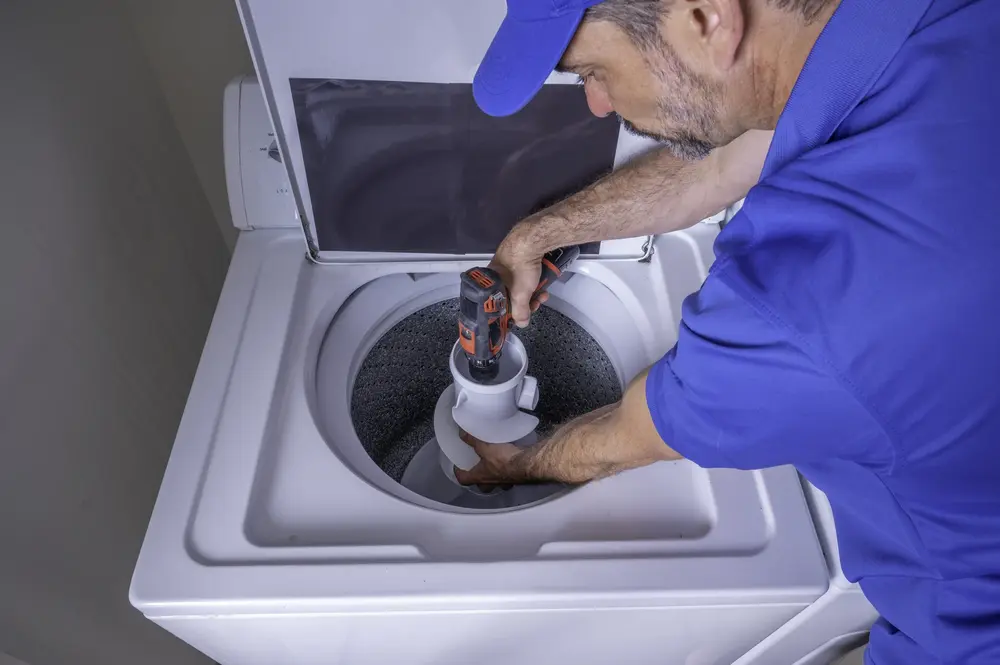
Sometimes the washer runs, but the clothes come out dirty. The agitator may not move the way it should. On many top load models, worn agitator dogs are the cause. These small parts wear out and stop the agitator from gripping.
An agitator repair kit is often inexpensive and easy to install. If the agitator still fails, the drive belt, motor coupler, or transmission may be worn. These parts need a professional diagnosis. Using too much detergent can also fool the machine, so measure your soap and use the right type.
When to call a professional
Many top load washer fixes are safe to try at home. Clearing a hose, balancing a load, and leveling the machine take just minutes. These simple steps solve a good share of problems.
Some repairs need trained hands and the right tools. Drain pumps, lid locks, tub bearings, and control boards all fall in this group. Guessing at these parts wastes money and time. Our technicians diagnose the real cause and fix it in one visit across Northeast Atlanta.
How to prevent top load washer problems
Prevention beats repair every time. A few habits keep your washer running for years. The table below lists the most useful ones.
| Habit | Why it helps |
|---|---|
| Do not overload the tub | Reduces strain on the motor and agitator |
| Balance heavy items | Prevents out of balance spin errors |
| Use the right detergent and dose | Stops excess suds that stall the spin |
| Keep the machine level | Prevents leaks and shaking |
| Check hoses a few times a year | Catches cracks before they leak |
| Run a monthly clean cycle | Cuts buildup and odor |
An efficient washer also saves water and power. You can compare efficient models through ENERGY STAR. Good care protects both your machine and your budget.
Get your top load washer running again
Most top load washer problems come down to a few common causes. Drain clogs, unbalanced loads, worn hoses, and tired parts top the list. You can handle the simple fixes yourself with a little time.
When a problem runs deeper, we are ready to help. Our team keeps top load washers running their best across Northeast Atlanta. Request service from Appliance Tech Pros today and enjoy clean laundry again.
FAQ
Why is my top load washer not draining?
The most likely cause is a clogged drain hose or a bad lid switch. Check the hose for kinks first. If it is clear, the pump or switch may need service.
Why does my washer stop mid cycle and not spin?
An out of balance load is the top reason. Spread the clothes evenly and restart the spin. A drain problem or worn belt can also stop the spin.
Why is my top load washer leaking from the bottom?
Look for loose or cracked hoses first. A worn tub seal, a bad pump, or an unlevel machine can also cause leaks. Internal leaks need a professional.
Is it worth repairing a top load washer?
Yes, in most cases. Many parts are affordable, and a good repair adds years of life. We help you weigh repair against replacement.
How can I stop my washer from shaking?
Balance the load and level the machine first. If the shaking and noise continue, worn bearings or suspension parts may be the cause.